Double Exposure of Venice with the Ricoh GR IIIx
This is the third post in a three-part series on shooting Venice with the Ricoh GR IIIx. The first, Venice with the Ricoh GR IIIx, covers the more classic, single-frame images of the city. The second, Reflections of Venice with the Ricoh GR IIIx, focuses on the reflections hidden around every corner. This post turns to double exposures: two frames combined in-camera into a single image.
One of the many interesting features of the compact Ricoh GR IIIx is in-camera multiple exposure, "Multi-exposure," as Ricoh's menu labels it. This drive mode lets you capture two or more frames and combine them into a single image. It can open up new creative possibilities, and I explored them in Venice.
The main idea I had for this set of images was overlaying the water effect onto a scene of Venice. The idea was without a doubt good, but the actual implementation took some trying before it produced any interesting results.
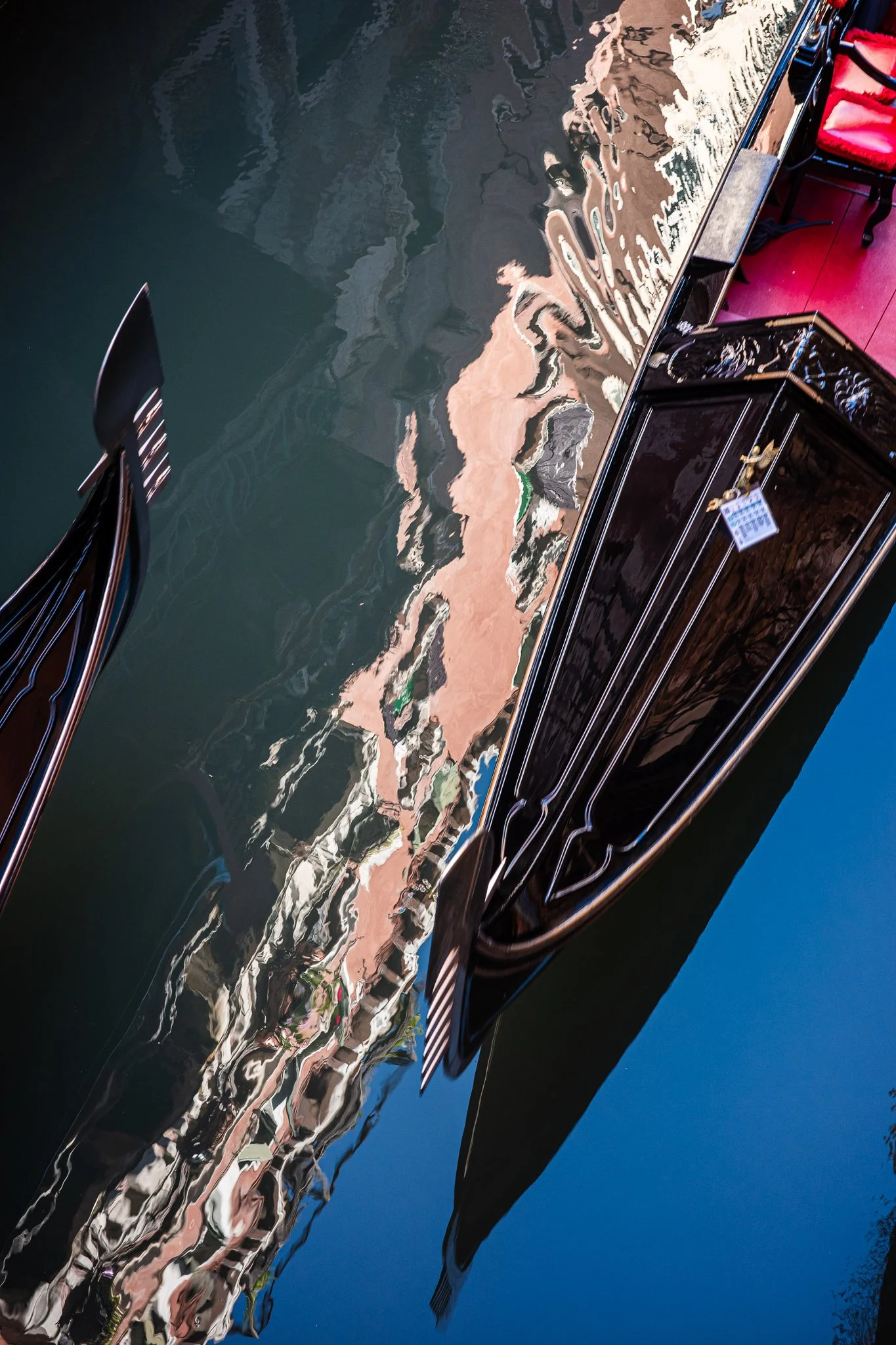
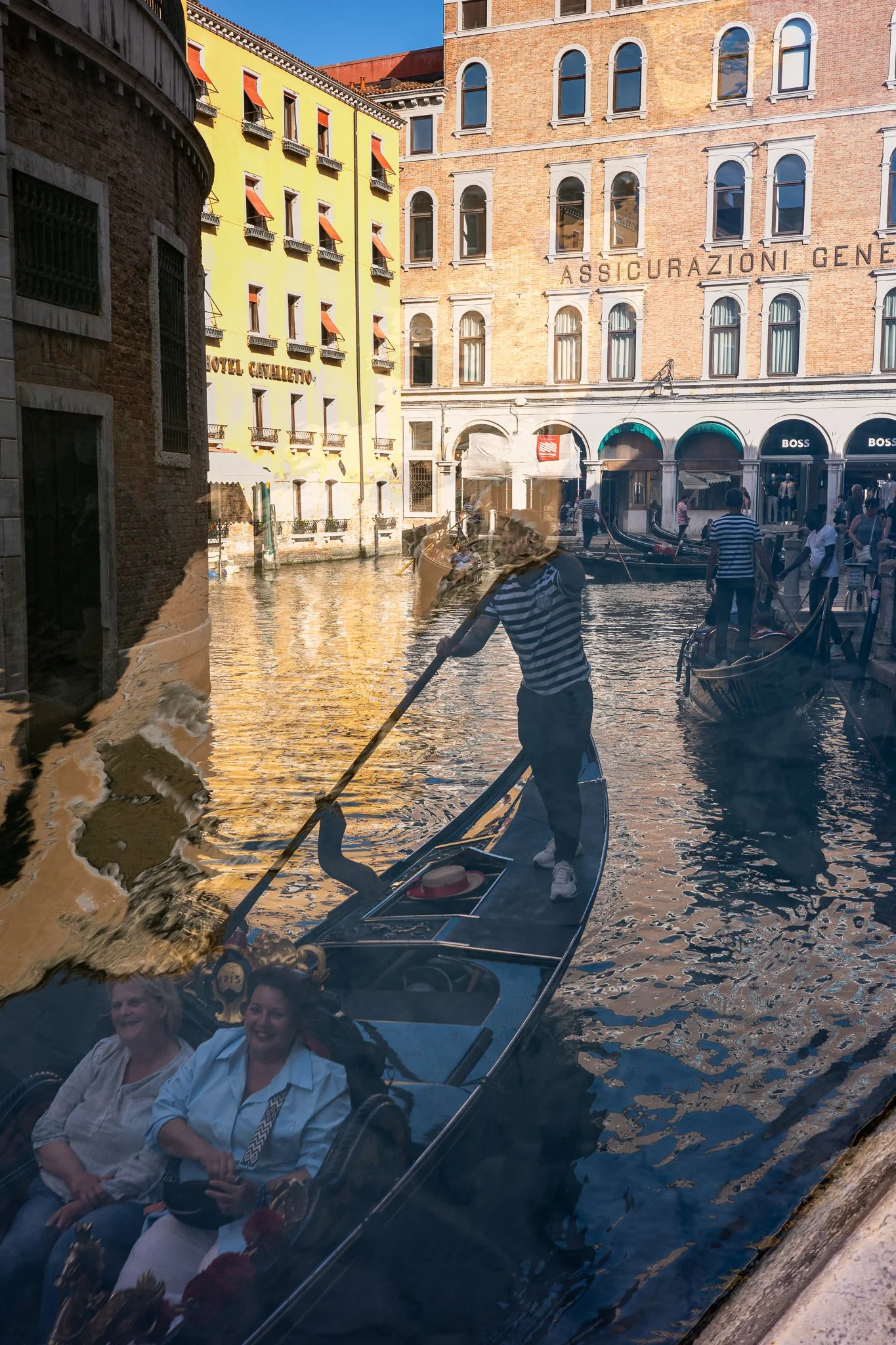
The first few experiments are nothing to write home about. First I pointed the camera down at the water, then lifted it up to capture the gondolas. The result? Meh. Still, I love the smiling faces of the two ladies in the gondola — I imagine them finally spending their hard-earned money on a gondola tour and having the time of their lives.
Does the double exposure add any value here? Not really. In this case, I even think it kind of ruined a potentially good image.
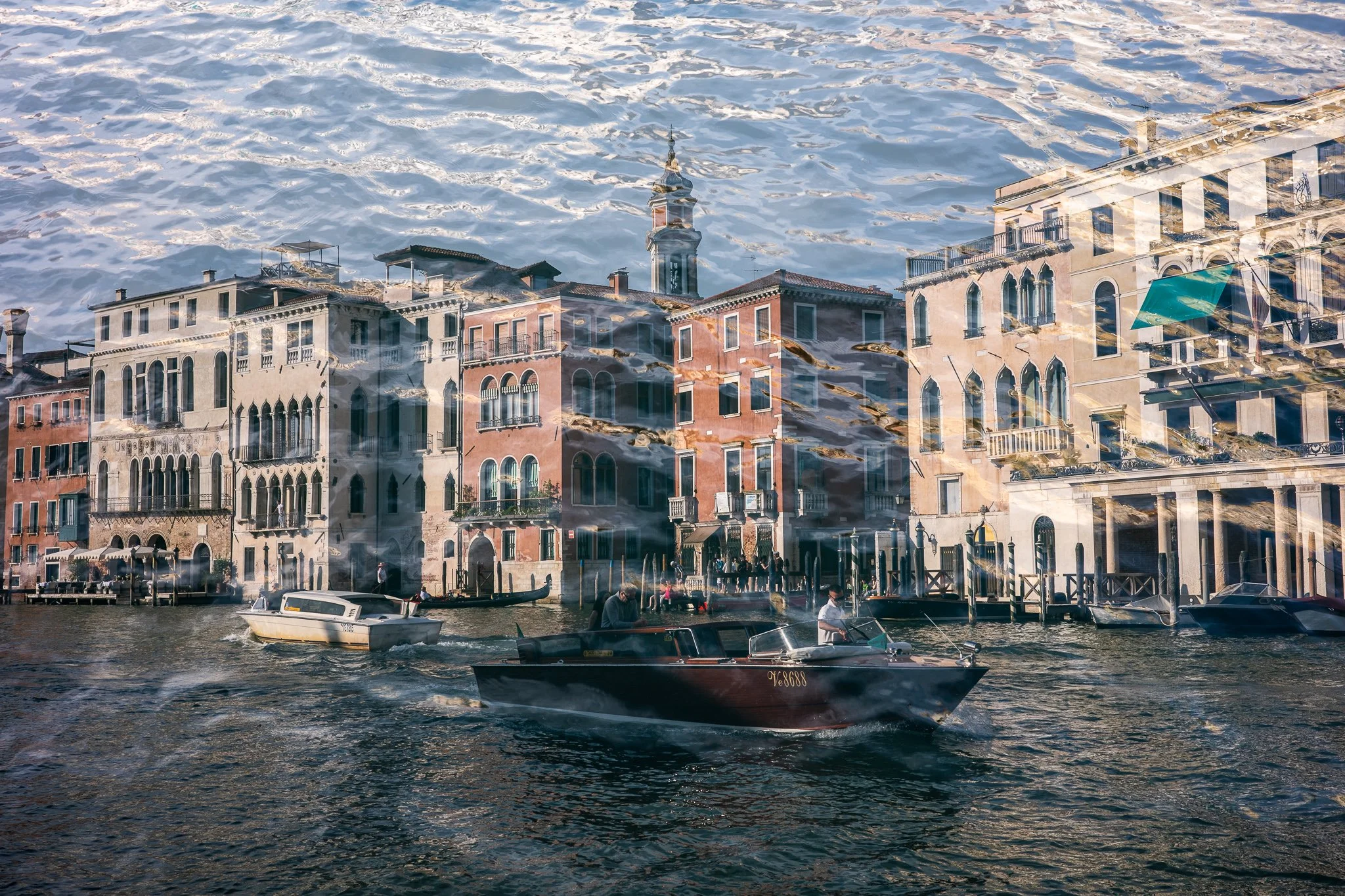
In the same location, I tried a horizontal shot with the same idea in mind: overlaying the water ripples onto a Venetian scene. This image, I believe, works better than the previous one. The sky does look watery and the sunny canal water transitions well into the yellow building. However, the different elements still don't work well together in the frame, there's a lack of harmony in a way.
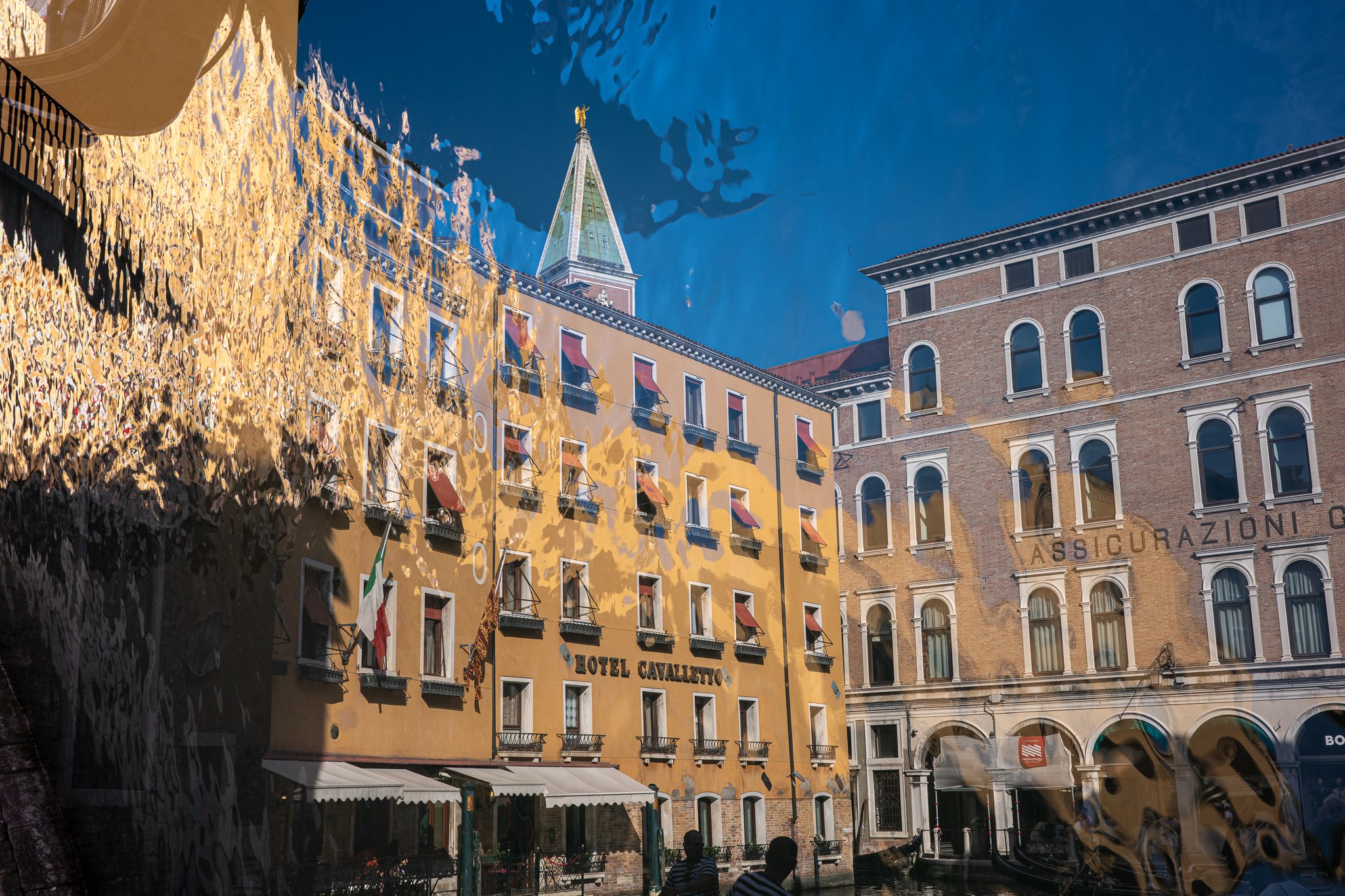
I took the next shot from the Rialto Bridge, and in this frame the elements from the two exposures work well together. The gondola on the left stands out enough, the water effect adds a dreamy touch to the whole image, and the scene in the background is compelling. Overall, this image combines some of the most characteristic elements of Venice (the view down the Canal Grande, the gondolas) into a single frame.
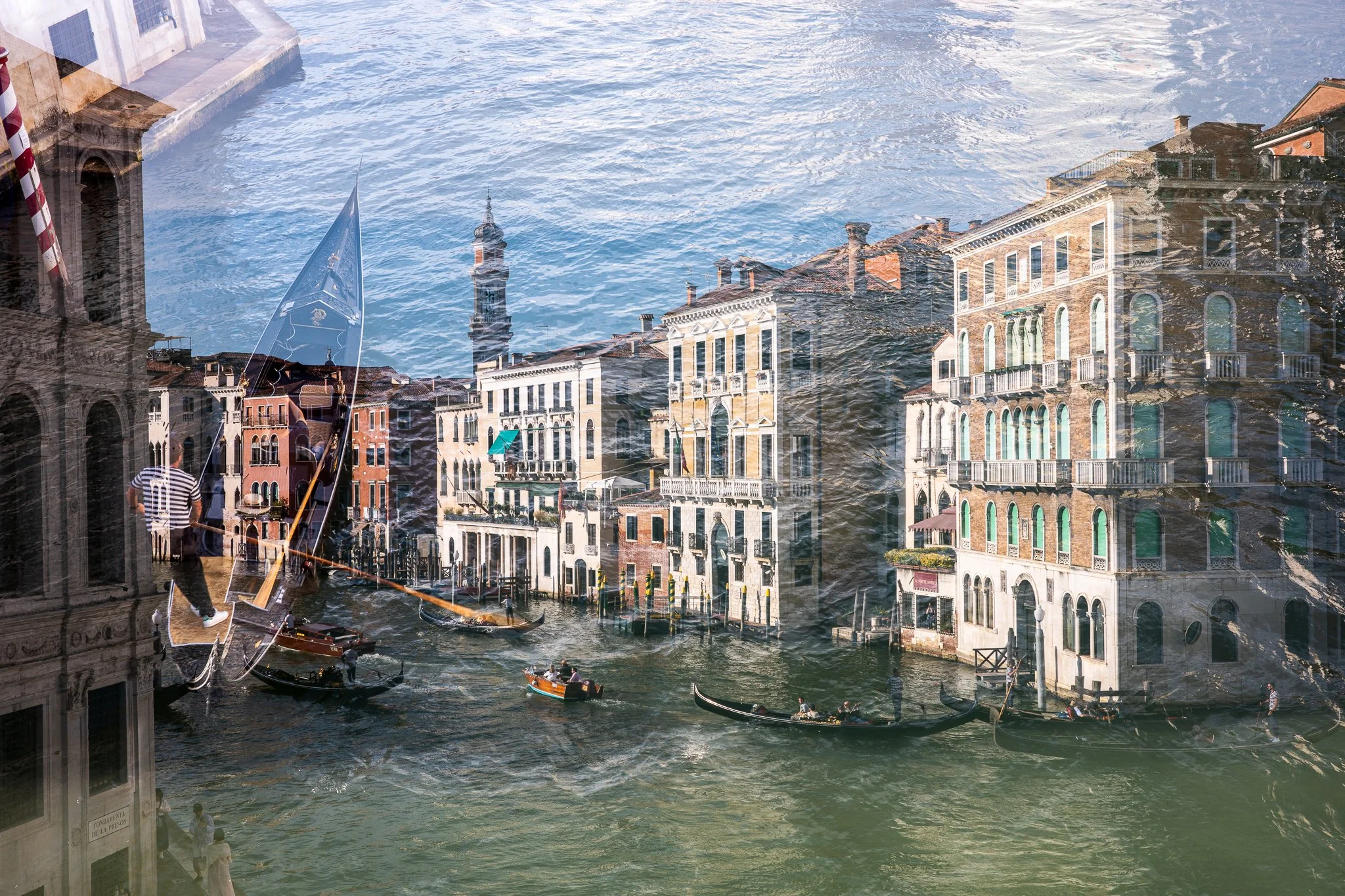
And not far from the Rialto Bridge, I took one of the images I'm most satisfied with, not only among the multiple-exposure ones, but across all three sets I shot with the Ricoh GR IIIx in Venice.
Once again, the base frame is the ripples of the water on the canal, overlaid on a view of the sunlit buildings facing the Canal Grande. I believe this image works for two main reasons. First, one frame only adds texture, without introducing any distracting elements. Second, the two frames share a consistent element: water. A rocky background, for example, would have been out of place here.
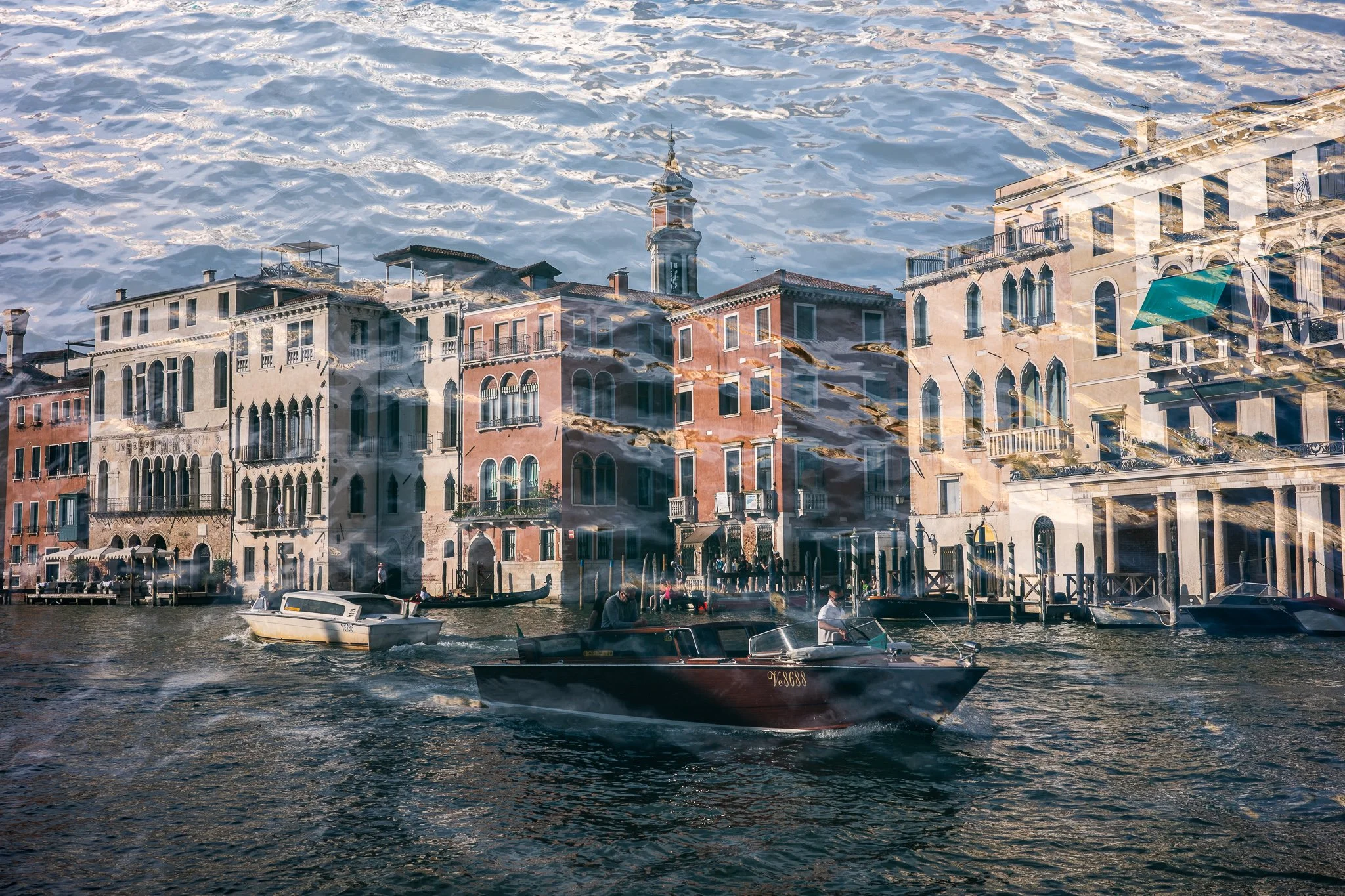
It's nice that the Ricoh GR IIIx, despite its compact size, offers in-camera multiple exposure, something modern Sony mirrorless cameras still don't offer to this day. It's also handy that the merging is done directly in-camera, with no post-processing needed to combine the frames. That way, you can check the overlay of the two images as you shoot.
It was interesting to dip my toes in the water of multiple exposure (to stay on the water theme!) and I feel it's definitely something worth exploring in more depth in the future.
This wraps up the three-part series on shooting Venice with the Ricoh GR IIIx. If you enjoyed these images, the first part, Venice with the Ricoh GR IIIx, covers the more classic single-frame images and the second, Reflections of Venice with the Ricoh GR IIIx, focuses on the reflections hidden around the city.